
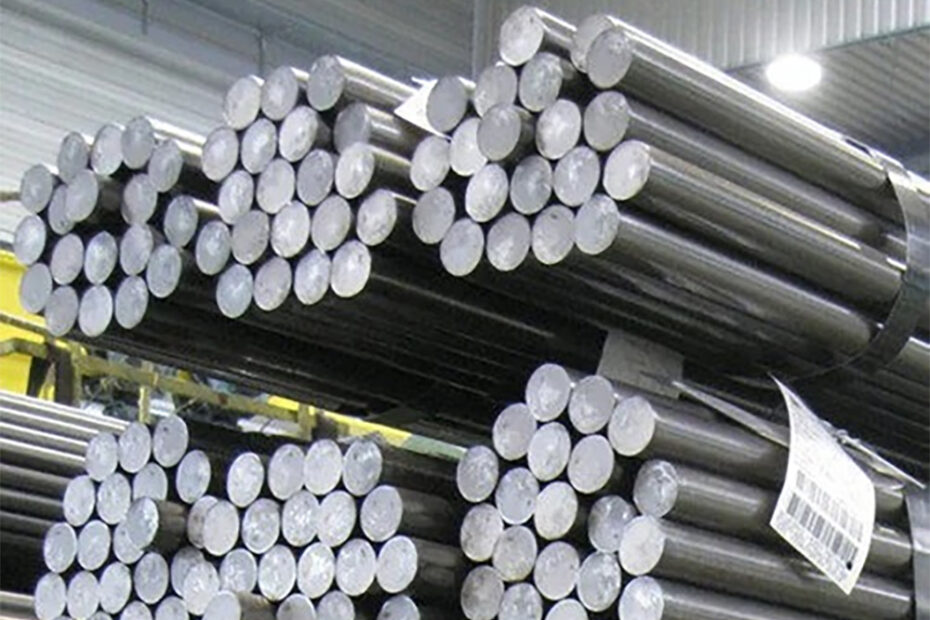
Electric Resistance Welded (ERW) pipes took the form of the foundation in the modern infrastructure and industrial projects in the world. The guide discusses the manufacturing process, technical and practical applications of the ERW piping systems with regard to what is present in the industry and engineering standards. This comprehensive guide will help readers understand what are ERW pipes, what is ERW pipe used for, and the ERW pipe manufacturing process in detail.
What are ERW Pipes?
ERW pipes are produced by bending flat steel sheets into tube-like pieces and welding together the longitudinal seam by using electric resistance welding. It is done by using high-frequency electrical current that causes localized heat to develop at the joint interface to produce fusion temperatures in the absence of filler materials. This will form a metallurgical bond and its mechanical properties will be similar to those of the parent material when performed correctly.
The difference between ERW and seamless pipes is mainly in the technology used to make them and not the capacity to perform. Although seamless are made of solid billets by means of piercing and rolling, ERW pipes have the same structural integrity in most commercial and industrial uses at significantly lower costs of production.
Quality Control and Process of Manufacturing
The ERW pipe manufacturing process contains a number of operations that are critical and have a direct impact on the quality of the final product:
- Material Preparation: The steel coils that are used in the production are termed as hot-rolled steel, whereby they are manufactured per the specified chemical composition and mechanical property requirements. Material received is inspected in terms of surface flaws, dimensional conformity and certification.
- Construction of Operations: The steel strip goes through progressive roll forming stations where it is gradually formed into circular cross-sections. The creation of sequences is also designed to reduce the stress on materials, and the overall uniformity of the thickness of the walls around the pipe.
- Welding Technology: The strip edges are brought together using controlled energy which is delivered by high frequency induction or contact welding systems. Its operation is at frequencies between 200–400 kHz which produces temperatures up to 1,400°C at the weld junction. The forge rollers are used to impose the perfect pressure to the solid parts of the molten metal to form a weld area of pure grain. This step is key to the ERW pipe manufacturing process.
- Post-Weld Processing: scarfing instruments are automated to take away internal and external flash of welds when the material is at high temperature. Following sizing processes then align the pipe with the outer diameter tolerance, with a value of usually +-0.5 percent in the case of precision work.
- Heat Treatment: Pipes can be normalizing or stress-relieving heat treated depending on the grade of the material and the requirements of the use to maximize the mechanical properties and dimensional stability of the pipes.
- Testing Procedures: Quality control comprises of hydrostatic pressure test, non-destructive test (ultrasonic or eddy current test on the weld seam), dimensional, and visual inspection. Mill test reports that certify the chemical composition and mechanical properties are normally included in documentation packages.
Classification and Specifications Relations
There are a number of categories of pipes that are manufactured in common ways but are aimed at different market segments:
- Galvanized Pipes (GP/GI): ERW pipes are hot-dip galvanized, so protective zinc coats are formed on the pipes with the average thickness of 85-150 micrometers. These products are ASTM A53 Type F standards, and are used to offer a higher availability of corrosion resistance to drinking systems, fire protection systems, and outdoor installations.
- Mild Steel Pipes (MS): This name is used to describe pipes made of low-carbon steel (usually 0.05-0.25% of carbon) produced through the processes of ERW or seamless. MS pipes are highly weldable and formable which makes it applicable in structural work and fabrication in general.
- Carbon Steel Pipes (CS): A more generalized category which includes all pipes made of steel with carbon as the main alloying agent. These are mild steel, medium carbon steel (0.25-0.60% carbon) and high carbon steel (0.60-1.00% carbon) based on the particular strength and ductility needs.
ERW Pipe Manufacturing Process: Industrial Usage and Performance
- Petroleum and Natural Gas Transmission: ERW line pipe made under API 5L standards finds application in the gathering systems, transmission lines, as well as distribution systems. The grades of pipes are between X42 and X70 and the yield strength is 290 to 485MPa. The contemporary ERW technology can create pipes with the required pressure of over 10 MPa to be used in the pipeline, in the event of proper specifications and installation.
- Municipal Infrastructure: ERW pipes are widely used in water distribution systems both galvanized and degrees between 15mm and 300mm. The internal surface is smooth to reduce the loss of friction and low cost of pumping as compared to other materials. Municipal pressure is usually between PN 10 and PN 25.
- Structural Engineering: Building frames, trusses and supporting structures of buildings use ERW hollow sections in construction projects. The design of connections and creation effectiveness: The tolerances of the dimensions are consistent, which allows the design of connections and efficiency of fabrication. Structural grades usually comply with ASTM A500 or EN 10219, and yield 230-355MPa.
- HVAC and Mechanical Systems: The refrigerant lines, condensate drainage and duct supports in heating, ventilating, and air conditioning systems are made of ERW. The dimensional consistency allows the fitting connections to be reliable and also it saves on time of installation in complicated mechanical spaces.
- Industrial Process Systems: These are chemical plants, oil refineries and manufacturing plants where ERW pipes are used to transfer process fluids, supply compressed air and utility systems. The choice of materials would consider the operating temperatures, pressure, as well as compatibility with fluids. The high-corrosion grades are specialized grades that are used in harsh chemical environments.
- Automobile Manufacturing: The motor industry uses large amounts of ERW pipe both in exhaust systems and structural parts and drive shafts. High-frequency welding is used to create clean internal surfaces that are needed in the characteristics of exhaust flow, whereas dimensional accuracy facilitates automated assembly.
- Agricultural Systems: Large-scale irrigation systems are the ones that use ERW pipes to transfer water over large agricultural lands. ERW pipes are cost-effective because of their economic ability to withstand corrosion (when galvanized), their mechanical strength, and their resistance to corrosion.
What is ERW Pipe Used For: Technical Benefits in the Engineering Practice
ERW pipes have a number of performance characteristics, which affect the choice of materials:
- Economic Efficiency: The cost of production of ERW pipes usually is 25-40 percent lower than similar seamless pipe specifications. This difference in cost is really noticeable in large scale projects where thousands of meters of piping has to be laid. The cost advantage is not only in the first material cost, but also in the cost of transportation whereby there is the benefit of less expenditure on transporting the products because of longer available lengths.
- Dimensional Precision: Automated forming and sizing processes attain extremely small tolerances of approximately +-0.5mm on smaller diameter (plus or minus) and +-10percent on larger diameter (plus or minus) as well as +-7.5percent on wall thickness (plus or minus) (domestic). This uniformity makes the calculations of system design easier and makes mechanical connections secure.
- Surface Characteristics: There is a low amount of roughness both on internal and external surfaces (RA < 6.3 micrometers) which is advantageous in fluid flow usage as it reduces the factor of friction and enables easy coating application. The flowing finish also has aesthetic benefits in the use of the architectural work.
- Weld Integrity: The latest technology of high-frequency welding is producing grain-refined weld areas with mechanical properties that are equal or even stronger than base metal requirements. Well fabricated welds made using ERW welds show failure modes beyond the heat-affected zone in burst test, which signify full-strength longitudinal welds.
- Size Range Flexibility: ERW cost-effectively produces pipes with the size range between 10 mm and 600 mm outside diameter and with wall thickness of between 1 mm and 25 mm. This is a spectrum that covers most of the commercial and industrial piping needs.
- Material Versatility: The ERW technology can accept most types of steel such as carbon steel, stainless steel (austenitic type especially), as well as low-alloy. This allows us to optimize materials based on application conditions of the services.
- Surface Compatibility: The highly polished, clean surface can accommodate any of several different protective coats such as fusion-bonded epoxy, polyethylene, and polyurethane systems. The uniformity of zinc coverage is because galvanizing processes have the same preparation of the surface.
Standards Compliance and Certification
Certified reputable manufacturers of ERW pipes are certified to more than one international standard:
- ASTM A53: Pipe, steel, black and hot-dipped, zinc-coated, welded, seamless. Includes grade A and B with defined minimum yield strength and tensile.
- ASTM A135: This is a specific specification of electric-resistance-welded steel pipe that also covers the testing of the integrity of the weld seam.
- API 5L: Line pipe specifications in petroleum and natural gas industry, encompassing grades of B through X80 in full with a full range of mechanical property, chemical composition as well as testing requirements.
- ASTM A500: Specification on cold-formed welded and seamless carbon steel structural tubing in round and shapes, which are generally used in construction work.
- EN 10217: European standard, establishing the terms of technical delivery relating to welded steel tubes used as pressure delivery.
- IS 3589/IS 1239: Indian standards of steel tubes to use in structures and mild steel screwed and socketed tubes, which are very popular in South Asian markets.
The project specifications ought to cite any appropriate standards and shall provide any other requirement regarding testing, documentation, or third party examination.
Conclusion
ERW pipes are well established and tested technology that has found a variety of uses in a variety of industries. The knowledge of manufacturing operations, material behavior and selection criteria allow engineers to define suitable piping systems that trade-off between the performance needs and the cost of the project.
The success of ERW piping systems requires the selection of the right material, material testing, installation, and maintenance programs. Whenever these factors coincide, ERW pipes are able to provide decades of both maintained service in a wide variety of applications including municipal water systems and petroleum transmission pipelines.
The engineers and the project managers will benefit by developing relations with qualified pipe manufacturers and distributors offering the company technical support, full documentation and uniformity of the quality of the products. The cooperative method of working will guarantee piping systems to suit the short-term project requirements as well as the long-term performance standards.