
ERW Pipes Manufacturer in India
Ensuring Quality At Every Step Of The Way
What is an ERW Pipe
ERW stands for Electric Resistance Welded. ERW pipes are manufactured from steel coils or steel strips that are cold formed into a cylindrical shape. The edges are then heated using electric resistance and welded together longitudinally to form a continuous seam.
Key Characteristics of ERW Pipes
- Manufactured from steel coils or strips
- Contains a longitudinal weld seam
- Good dimensional accuracy
- Smooth surface finish
- Cost effective production
- Suitable for low to medium pressure applications
ERW steel pipes are widely used in structural applications, water pipelines, gas distribution, fencing, scaffolding, and mechanical engineering projects.
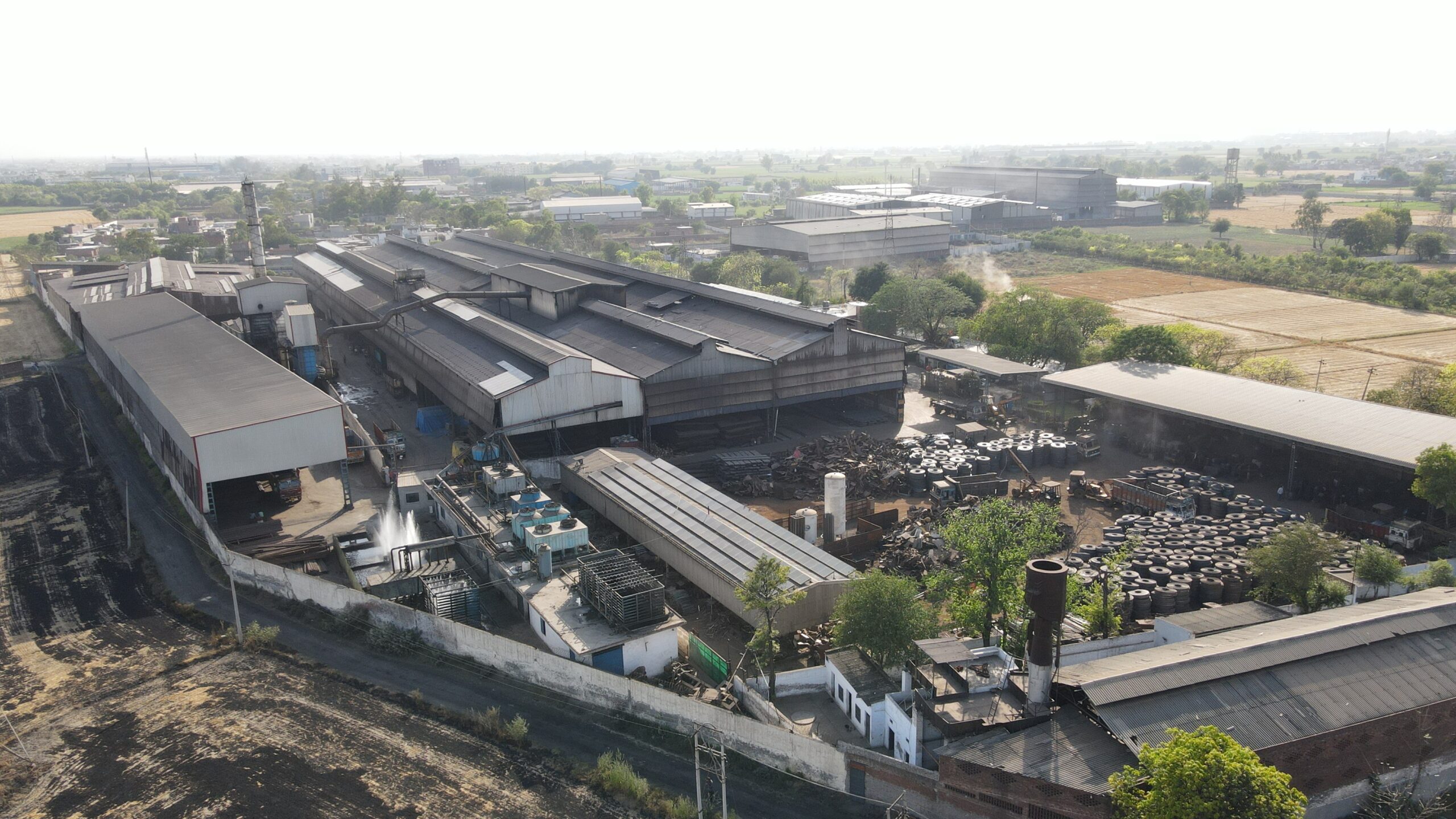
Manufacturing Process and Production Technology
ERW pipes are produced from hot rolled steel coils or strips. The strip is passed through a series of forming rollers that gradually shape it into a cylindrical form. The edges are then joined using high frequency electric resistance welding. The heat generated by electrical current fuses the edges together without the use of filler material. After welding, the pipe undergoes heat treatment, sizing, straightening, and non destructive testing such as ultrasonic testing or hydrostatic testing.
Weld Seam and Structural Integrity
In ERW pipes, a longitudinal weld seam runs along the length of the pipe. With modern high frequency welding and proper heat treatment, the weld zone can achieve strength comparable to the base metal. However, it remains a metallurgical transition area.
Pressure Rating and Load Bearing Capacity
ERW pipes perform reliably in low to medium pressure applications. With advancements in welding technology and strict quality control under standards such as ASTM and API specifications, ERW pipes today are significantly stronger than older generations. However, for extremely high pressure or critical temperature services, seamless pipes are typically preferred.
Ensuring Quality At Every Step Of The Way
ERW Welded Steel Pipe Size & Specification
| Standard | GB/T3091-2008, API SPEC 5L |
| Material | Q195, Q215, Q235, Q345B, X42, X52, X60 |
| Type | Straight welded steel pipe |
| Process | Electrical resistance weld |
| Dimensions | |
| Diameter | 31MM OD TO 88MM OD |
| Thickness | 1.2 MM TO 3.5 MM |
| Length | STANDARD LENGTH IS 20 FEET, CAN BE ADJUSTED AS PER REQUIREMENT |
| Specification | 114-1440mm * 4-30mm / 31-88 MM * 1.2 TO 3.5 MM |
| Other Materials Testing | NACE MR0175, H2 SERVICE, CRYO SERVICE, etc. |
Ensuring Quality At Every Step Of The Way
Standout Benefits of ERW Pipes
Superior Dimensional Accuracy
Consistent wall thickness throughout the pipe length
Tight tolerances on outer diameter ensuring perfect fit in assemblies
Uniform roundness reducing installation errors and leakage risks
Exceptional Strength and Structural Integrity
High-frequency electric resistance welding creates a weld seam as strong as the base material
Excellent pressure-bearing capacity suitable for high-stress applications
Resistant to deformation under mechanical and thermal stress
Cost-Effective Manufacturing
Lower production cost compared to seamless pipes of equivalent specifications
Less raw material wastage during manufacturing
Economical choice for large-volume industrial and infrastructure projects
Wide Range of Applications
Suitable for oil and gas transmission, water supply, construction, and structural use
Available in multiple sizes, thicknesses, and grades to match diverse project requirements
Compatible with both above-ground and underground installations
Smooth Internal Surface
Reduced friction loss during fluid or gas transmission
Improves flow efficiency and reduces energy consumption in pipelines
Easier to clean and maintain over the product lifecycle
Excellent Weldability and Machinability
Easily welded, cut, and fabricated on-site without specialised equipment
Compatible with standard threading, grooving, and flange connections
Saves time and labour cost during installation
Consistent Quality and Compliance
Manufactured under strict quality controls with IS, API, and ASTM certifications
Each pipe undergoes hydrostatic and non-destructive testing before dispatch
Reliable batch-to-batch consistency for large-scale projects
Corrosion Resistance Options
Available with internal and external coatings including epoxy, zinc, and polyethylene
Suitable for use in corrosive environments including chemical plants and coastal areas
Extended service life with appropriate protective treatment
Environmentally Responsible Production
Energy-efficient manufacturing process compared to alternative pipe production methods
Lower carbon footprint per unit produced
Recyclable material contributing to sustainable construction practices
Fast Availability and Lead Times
Mass production capability ensures faster delivery timelines
Readily available in standard sizes across most industrial markets
Reduced project delays due to consistent stock availability