
Hot rolled steel coils are at the heart of some of the most critical industries in India. Construction, automotive, energy, infrastructure, all of them depend on HR coils in one way or another. And yet, for many buyers and procurement teams, the product still raises basic questions around how it is made, where it is used, and whether it is the right fit for their application.
This blog covers everything you need to know about hot rolled steel coils. Explore what they are, how they are made, where they are used, and what makes them a smart choice for industrial buyers.
What Is a Hot Rolled Steel Coil?
A hot rolled steel coil is a flat-rolled steel product made by heating steel above its recrystallisation temperature, typically above 900 degrees Celsius, and passing it through rolling mills to achieve the required thickness and width. The steel is then rapidly cooled and wound into a coil for storage and transportation.
This process gives the steel good ductility, toughness, and mechanical strength. Since HR coils go through fewer processing steps compared to cold rolled steel, they are also more cost-effective for bulk industrial use.
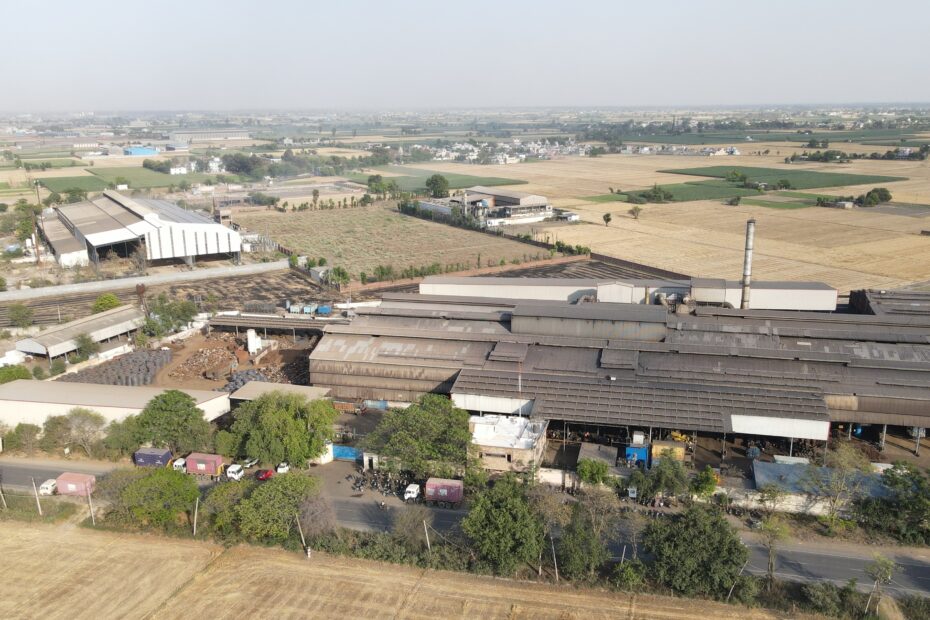
At R.P. Multimetals, our HR coils are manufactured from billets produced in-house. This gives us control over quality at every stage of production. We supply HR coils ranging from 5 to 11 inches in width to meet a variety of industrial needs.
Hot Rolled Coil Process: Step-by-Step Method
The hot rolled coil process goes through a well-defined manufacturing sequence that directly determines the quality, strength, and consistency of the final product. Each step in the hot rolled steel coil production builds on the previous one, and getting it right at every stage is what separates a reliable HR coil from a substandard one. Here is a look at how the process works from start to finish.
Step 1: Billet Preparation
The process starts with steel billets, which are solid SQUARE blocks of steel. At R.P. Multimetals, our continuous casting machine produces billets in-house, which then go directly into our rolling mill. Making billets in-house means we control the steel composition from the very beginning.
Step 2: Reheating in the Furnace
The billets go into a reheating furnace where they are brought to temperatures well above the recrystallisation point. At this temperature, the steel becomes malleable enough to be shaped without cracking or developing internal stress. Consistent heating across the billet is important to ensure the final coil has uniform properties throughout.
Step 3: Rolling Mill Processing
The heated steel is passed through a series of rolling mill stands where it is compressed and elongated progressively to the target thickness and width. R.P. Multimetals was among the first steel manufacturers in India to introduce hot rolling of the strip before coiling. This approach results in better mechanical properties and more accurate dimensions in the finished product.
Step 4: Cooling and Coiling
After rolling, the steel strip is cooled rapidly using water jets to set the metallurgical properties. The strip is then wound onto spools to form the finished hot rolled coil, ready for dispatch or further processing into downstream products like ERW pipes.
Hot Rolled Coil Uses: Where Is HR Steel Applied?
HR coils are used across a wide range of industries in India because of their strength, weldability, and ability to be formed into various shapes. Here are the main hot rolled coil uses across sectors.
- Construction and Infrastructure: HR coils go into structural beams, columns, roofing sheets, and reinforcement components used in buildings, bridges, and road infrastructure. India’s infrastructure growth makes this one of the largest application areas for hot rolled steel coils.
- ERW Pipes and Tubes: At R.P. Multimetals, HR coils produced in our rolling mill feed directly into our ERW pipe plant. This integrated setup means the same quality standards carry through from coil to finished pipe. ERW pipes are used in water supply networks, gas distribution systems, and structural applications.
- Automotive Manufacturing: Chassis frames, wheel rims, axles, and structural body parts are commonly made from hot rolled steel coils. The high yield strength of HR steel makes it well suited for components that face constant load and stress in vehicles.
- Industrial Machinery and Equipment: Agricultural machinery, heavy equipment, storage tanks, and industrial containers are regularly fabricated using HR coils because the material is easy to form and weld at scale.
- Energy Sector: Oil and gas pipelines, wind turbine towers, solar mounting structures, and power plant components are among the energy sector applications where HR coils are used due to their strength and durability.
- General Fabrication: Warehouses, storage racks, railway components, and shipbuilding all use HR coils as a base material where structural performance matters more than surface finish.
Hot Rolled Steel Coil Benefits: Why Industries Prefer HR Steel
Here is a practical look at the hot rolled steel coil benefits that make it a preferred material across industries.
- Strength and Structural Integrity
The hot rolling process refines the grain structure of the steel, which improves tensile strength, toughness, and impact resistance. The strength-to-weight ratio of HR coils makes them reliable for load-bearing applications in construction and heavy engineering.
- Cost-Effectiveness
HR coils require fewer processing steps and less energy to produce compared to cold rolled steel. This keeps production costs lower and passes on savings to the buyer. For projects where large volumes of steel are needed, this cost advantage is significant.
- Formability and Weldability
Hot rolled steel is more ductile and easier to work with than cold processed alternatives. It can be cut, bent, formed, and welded without much difficulty. This reduces production time and tooling costs for fabricators.
- Consistent Quality at Scale
With an integrated manufacturing setup, R.P. Multimetals produces HR coils with tight dimensional tolerances and consistent mechanical properties batch after batch. Buyers can count on receiving the same quality whether they place a small order or a large one.
- Versatility
HR coils come in a range of widths and thicknesses, making them usable across many different applications. Structural steel for civil engineering, input material for pipe manufacturing, raw stock for fabrication, HR coils work across all of these and more.
- Reliable Supply
As one of the most widely produced steel products in India, HR coils are well supported by established supply chains. R.P. Multimetals operates with in-house production capacity at every stage, which allows us to fulfil orders consistently and on time.
R.P. Multimetals Limited: HR Coil Manufacturer in India
R.P. Multimetals Limited has been operating in the Indian steel industry since 2000. Our manufacturing setup is vertically integrated, covering induction furnaces, a continuous casting machine, a rolling mill, and a pipe plant under one operation.
Our HR coils are made from billets produced in-house, which means quality is not dependent on external suppliers. We were among the first steel manufacturers in India to introduce hot rolling of the strip before coiling, which gives our coils better dimensional accuracy and mechanical properties compared to standard alternatives.
Connect with our experts to discuss your requirements or request a quote.