
Key Takeaways
- HR coil (hot rolled) is produced by rolling steel above its recrystallization temperature (~1,100°C). The result is a mill-scale surface, wider dimensional tolerances, and a product that’s cheaper to make and cheaper to buy.
- CR coil (cold rolled) starts as an HR coil. It’s pickled, then cold-reduced at room temperature, and usually annealed. The extra processing gives you a cleaner surface, tighter tolerances, and higher per-kg cost.
- The surface finish difference is the single most practical distinction for a fabricator. HR coil’s mill scale must be removed before painting or coating. CR coil goes straight to the press or the paint line.
- HR coil covers thicker gauges (1.6mm and up into structural thickness). CR coil dominates the thin-gauge range mostly under 3mm where dimensional accuracy and surface quality matter more than raw thickness.
- Most fabricators in India use both. The question isn’t which is better. It’s which one belongs in which part of your production flow.
Think about the last time a procurement request came in that just said “steel coil, 2mm.” No grade. No surface spec. No finish call.
For someone running a structural fabrication shop, that HR coil is obvious. For someone making electrical enclosures or appliance panels, that CR coil is equally obvious. The problem is that the two industries speak to the same steel traders, get quoted on the same line items, and sometimes end up with the wrong material because the spec was too loose.
Here’s what you actually need to know to get the right coil for the right job.
Quick Verdict
Use HR coil if your application involves heavy structural sections, pipes, railway components, agricultural equipment, ship plates, or any use case where the controlling factor is load capacity and you’ll be welding, cutting, or bending at scale not painting directly off the coil.
Use CR coil if your application requires a clean, smooth surface for painting, powder coating, or plating without prior surface preparation; tight thickness tolerances for precision press work; or thin-gauge sheet for white goods, automotive body parts, furniture, or precision enclosures.
At-a-Glance Comparison
| Parameter | HR Coil | CR Coil |
| Manufacturing route | Hot rolled above ~1,100°C | Cold reduced from pickled HR coil |
| Surface finish | Mill scale — rough, blue-grey | Clean, smooth (CRCA after annealing) |
| Thickness range | 1.6mm to 25mm+ | 0.3mm to 3.2mm (predominantly) |
| Dimensional tolerance | ±0.15mm to ±0.5mm | ±0.05mm to ±0.15mm |
| Yield strength (typical) | 235–355 MPa (grade-dependent) | 220–300 MPa (after annealing) |
| Weldability | Good — scale must be cleaned first | Good — clean surface speeds welding |
| Pre-paint prep needed | Yes — grinding or shot blasting | No — goes direct to paint or coat |
| Relative cost | Lower | 15–25% premium over HR |
| Common Indian grades | IS 2062 E250, E350, E410 | CRCA (IS 513), HRPO |
| Primary use | Structural, pipes, heavy fab | Automotive panels, appliances, precision sheet |
How the Manufacturing Difference Creates Every Other Difference
This is the part most comparison articles skip, and it matters if you’re specifying or sourcing.
Hot rolling works by heating a steel slab to well above its recrystallization point — around 1,100°C to 1,250°C — and then passing it through a series of rolling mills while it’s still hot. At that temperature, steel flows and deforms without the internal stress buildup that comes from cold working. The result: good ductility, uniform grain structure, and a material that tolerates forming, bending, and welding without cracking.
The catch is the surface. As the steel cools in air after rolling, the hot surface oxidises. That oxide layer — mill scale bonds tightly to the base metal. It’s hard, brittle, and electrically resistant. If you try to paint over mill scale without removing it, you’ll get adhesion failure. If you weld through it without wire-brushing or grinding, you’ll get porosity. HR coil isn’t unfinished it’s finished for the applications that don’t need a clean surface. But fabricators who miss that point end up with paint peeling off structural frames within two monsoon seasons.
Cold rolling starts where HR coil ends. The HR coil is first run through an acid pickling bath (typically hydrochloric or sulfuric acid) that strips the mill scale completely. Then it’s cold-reduced — passed through rollers at room temperature which reduces the thickness precisely, work-hardens the steel, and produces that characteristic smooth, bright surface.
Because cold working increases internal stress, most CR coil is then annealed (heated to a controlled temperature, usually 650–750°C, then cooled slowly) to soften it back to a formable state. The result is CRCA Cold Rolled Close Annealed which is the standard product you’ll find across Indian steel service centres.
The annealing step is why CR coil’s yield strength is often comparable to or even slightly lower than equivalent-thickness HR coil. You’re paying for surface quality and dimensional precision, not raw strength.
Head-to-Head: What Actually Decides the Choice
1. Surface Condition — the most practical difference
You push an HR coil panel through your press line and the scale flakes off. Fine it’s going to a structural application where surface prep is planned. You push a CR coil panel through the same press and it goes directly to powder coat. Two different production flows, two different material requirements.
For any fabricator making products with a visible or painted surface electrical panels, furniture frames, automotive body panels, air conditioning casings CR coil eliminates a surface prep step that costs time and abrasive media. The 15–25% premium on CR coil is often recovered in reduced shot-blasting or grinding hours.
For structural fabrication columns, beams, trusses, base plates, pipe rack frames the surface will get painted eventually, but the steel will be shot-blasted as part of the painting specification anyway. There’s no reason to pay the CR premium for a product that’s going to be mechanically abraded before coating.
2. Thickness and Tolerance
CR coil dominates below 3mm. Above 3mm, you’re generally looking at HR coil both because cold reduction at heavy gauges requires enormous rolling force (and becomes cost-prohibitive) and because most applications at 4mm+ are structural rather than precision sheet metal.
The tolerance difference is real and measurable. If you’re making a component where two sheets need to nest or mate precisely — a pressed automotive bracket, a precision electrical enclosure, a folded HVAC duct — ±0.05mm tolerance matters. The tighter CR tolerance reduces scrap from inconsistent blank sizes and improves fit-up on assembly jigs.
For structural fabrication, ±0.3mm on a 6mm plate doesn’t affect anything that matters. IS 2062 E250 HR coil at standard tolerance is exactly what a rolling mill, a pipe plant, or a structural fabricator needs.
3. Grade and Strength
HR coil gives you a wider range of structural grades under IS 2062: E250 (equivalent to Fe 410), E350 (Fe 490), E410 (Fe 540). These grades have defined yield strength, tensile strength, elongation, and impact energy requirements — the full set of properties a structural engineer uses in a design calculation.
CR coil’s primary Indian standard is IS 513, which covers CRCA in grades O (ordinary), D (drawing), DD (deep drawing), and EDD (extra deep drawing). These grades are defined by formability how much you can draw and stretch the material before it cracks not by structural load capacity. The grading system reflects what CR coil is actually used for: press-formed parts where the steel needs to flow into a die shape without tearing.
This is a practical point for fabricators working across both applications. IS 2062 E350 and IS 513 DD are both “steel coil” on a purchase order. They’re completely different products serving completely different design requirements.
4. Cost
The price gap between HR and CR coil in India tracks processing cost. As of early 2026, CR coil typically commands a ₹4,000–₹7,000/MT premium over HR coil of equivalent thickness the range varies by gauge, grade, and market conditions. That premium pays for pickling, cold reduction, annealing, and the tighter quality controls throughout.
For a fabricator running 500 MT/month of structural steel, substituting CR for HR to avoid surface prep would add ₹20–35 lakh per month in material cost for a step that shot-blasting handles in the painting specification anyway. And in the other direction: using HR coil for an appliance manufacturer who needs to paint 0.6mm sheets directly off the press adds a surface prep step that CR coil eliminates entirely a step that likely costs more per unit than the material savings.
Match the material to the application. The coil that looks cheaper on the purchase order isn’t always cheaper by the time the part is shipped.
Note: Cost is just a rough idea, real life quotation my vary.
Which Coil for Which Application
ERW pipe manufacturing: HR coil. Always. The pipe mill slits HR coil into strips, forms them through rollers, and welds the seam using ERW. The inside surface of the finished pipe doesn’t need a smooth finish, and the pipe’s outer surface gets cleaned as part of the galvanising or painting process. CR coil would add cost with no production benefit here.
Automotive body panels (OEMs and Tier 1 suppliers): CR coil, specifically IS 513 DD or EDD grade. Deep drawing for door panels, hoods, and fenders requires the high formability that the deep-drawing grades provide. HR coil would crack in the draw die at these geometries.
Structural beams, columns, base plates: HR coil or HR plate. IS 2062 grade as specified by the structural drawing. CR coil adds unnecessary cost and brings grades that weren’t part of the structural design assumption.
Electrical enclosures and control panels: CR coil (CRCA), typically 1.2mm to 2mm. The clean surface goes directly to powder coating. Tolerances matter for door fit-up and gasketing. HR coil at this gauge would require a surface prep step and still produce inconsistent fit on precision-cut blanks.
White goods (refrigerators, washing machines, AC units): CR coil for outer panels; HR coil possible for internal frame brackets where surface is not visible. Manufacturers typically segregate the two clearly in their bill of materials.
Pre-galvanised or GI sheet manufacturing: CR coil as the input substrate (CRCA or HRPO, depending on the galvanising line specification). The zinc coating bonds far better to a clean, pickled surface than to a mill-scale HR surface.
Agricultural equipment (tractors, threshers): HR coil for frames and structural components; CR coil for cab panels if surface quality is required. Frame members in farm equipment see rough service — the structural grade matters more than surface finish.
A Note on HRPO — the Product Between HR and CR
HRPO (Hot Rolled Pickled and Oiled) occupies a space that often confuses buyers. It’s HR coil that’s been pickled (mill scale removed) and oiled (to prevent flash rusting during storage) — but not cold-reduced or annealed. HRPO gives you a clean surface without the thickness reduction of cold rolling, which makes it useful when you need:
- A clean surface for forming or welding without surface prep
- Thicker gauges (2mm–6mm) that aren’t available in CRCA
- A lower cost than full CRCA for applications that don’t need tight tolerance
HRPO is common in automotive frame stamping and in pipe plants that want cleaner weld seams without paying for full CR reduction. It’s not the same as CR coil the tolerances are still HR tolerances, and the mechanical properties are HR properties but it’s a practical middle product for the right use case.
Frequently Asked Questions
Can HR coil be used in place of CR coil to reduce cost?
For structural applications, yes. For surface-quality applications painted consumer goods, precision sheet metal, automotive body work no. HR coil’s mill scale requires surface preparation before painting, and the wider thickness tolerance causes problems on precision blanking lines and assembly jigs. Substituting HR for CR saves on material cost but frequently adds more in processing cost and scrap rate than it saves.
What does CRCA stand for, and is it the same as CR coil?
CRCA is Cold Rolled Close Annealed. It’s the most common form of CR coil in India. After cold reduction, the steel is annealed (a controlled heat treatment) to relieve the work hardening from cold rolling and restore formability. CRCA is what most buyers mean when they say “CR coil” in the Indian market. Non-annealed CR (sometimes called “full hard” CR) is harder and less formable it’s used for specific applications like roll-formed sections, not general sheet metal fabrication.
What’s the practical thickness boundary between HR and CR coil in Indian supply?
In Indian supply, CR coil is widely available from 0.3mm to 3.2mm. Above 3mm, HR coil takes over — both because cold-reducing thick gauges is commercially inefficient and because most thick-gauge applications are structural, where HR grades under IS 2062 are the correct specification. If you need 4mm or 6mm with a clean surface, HRPO is typically the right product to ask for.
Which standard covers HR coil grades in India?
IS 2062 covers hot rolled medium and high tensile structural steel. The main grades are E250 (formerly Fe 410), E350 (Fe 490), and E410 (Fe 540), with sub-grades (A, B, C) distinguishing impact test requirements. For general fabrication and pipe manufacturing, E250 Grade B is the most commonly specified. IS 10748 covers HR strips used specifically for ERW pipe manufacturing.
How do I identify HR coil vs CR coil when material arrives at my facility?
Run your hand across the surface. HR coil has a rough, scaly texture the mill scale is unmistakable once you know what you’re feeling. CR coil is smooth and slightly oily (the protective oil applied after annealing). Check the colour too: HR coil is typically dull blue-grey; CR coil is bright silver or light grey. If you’re still unsure, check the test certificate the standard (IS 2062 vs IS 513) and the grade designation will tell you immediately which product you’ve received.
My supplier quotes both HR and CR coil at the same thickness. Should I always go CR for quality?
Not necessarily. At overlapping thicknesses (1.6mm to 3mm), CR coil is better for surface quality and precision, but it costs more and isn’t always necessary. If your application involves structural welding, the part will be shot-blasted before painting anyway. If the tolerance band on your design allows ±0.15mm, HR coil’s tolerance is perfectly adequate. Pay for CR coil where the surface and precision give you a measurable production benefit — not as a blanket upgrade.
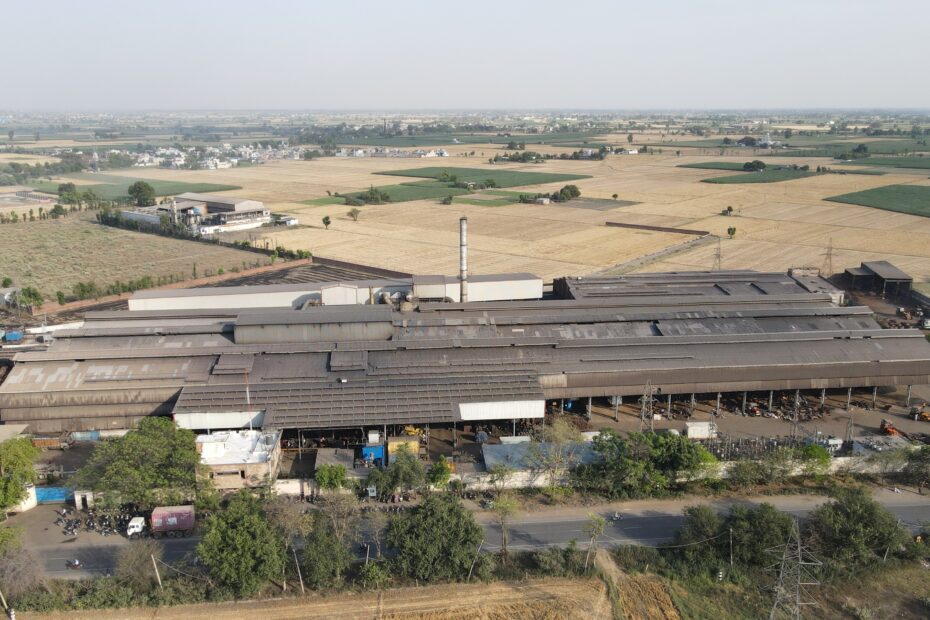
R.P. Multimetals manufactures HR coils from in-house billets — 1.6mm to 4mm thickness, 100mm to 300mm width — with certified quality under IS 10748. Our HR coils supply our own ERW pipe plant and downstream fabricators who need consistent, traceable input material.
Discuss your coil requirement with our team.