
To specify steel billets for your rolling mill, fix four things in this order: the cross-section (commonly 100mm to 150mm square, matched to your finished product and reheating furnace), the grade (chosen on carbon-manganese balance against the IS standard your end product must meet), the length (6m or as your furnace takes), and the test-certificate requirements (ladle analysis per cast, traceable heat numbers, IS 14650 compliance). Get the size-to-product match wrong and your reduction ratio fights you. Get the grade wrong and the bar fails its finished-product spec no matter how well you roll.
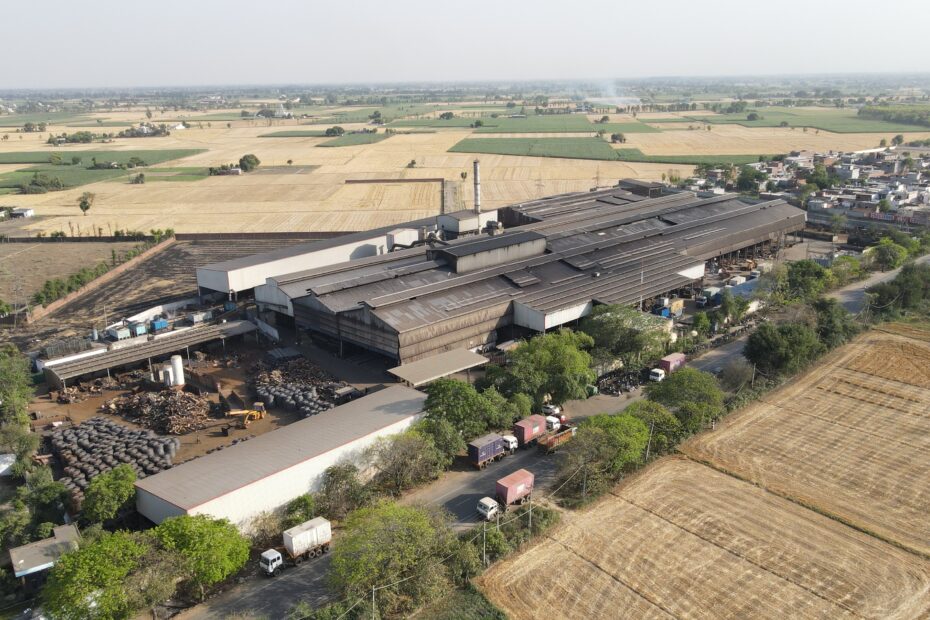
Most billet purchasing in India still runs on habit. The mill bought 100mm last year, so it buys 100mm this year, and the grade conversation amounts to “MS billet” scrawled on a PO. That works right up until the day a heat rolls badly, the rebar misses its IS 1786 mark, and nobody can say whether the fault was the billet or the rolling. This guide is about specifying tightly enough that the answer is never in doubt. We cast billets from scrap at our plant in Mandi Gobindgarh the town that happens to host the Steel Re-Rolling Mills Association of India so the people reading this are, in the most direct sense, our customers. Here’s how to tell us exactly what you need.
First, the BIS definition because it decides what you’re even buying
A quick bit of housekeeping that trips people up. Under the Bureau of Indian Standards, a billet is a semi-finished product, square (with rounded corners) or round, generally up to about 125mm × 125mm in cross-section or equivalent. Go larger than that and the correct term is a bloom. The distinction matters on a purchase order: ask for a “150mm billet” and a pedant could call it a small bloom, but in trade practice the Indian re-rolling market treats the whole 100mm-to-150mm square range as billet stock, and that’s how most suppliers us included list it. Our own square sections run from 75mm to 150mm. Just know that the word stretches a little at the top end, and write the actual dimension on the order rather than relying on the label.
With that settled, the real decision: which dimension.
Choosing the billet size for your product
The billet section isn’t a preference. It’s set by two things he finished product you’re rolling and the reheating furnace and roughing stand you’re rolling it on. Pick the size that gives you the right reduction ratio without overworking or under-filling your first passes.
Here’s the practical mapping the trade runs on:
| Billet section | Typical finished products | Why it fits |
| 75–100mm sq | Light wire rod, small-diameter rebar (8–12mm), small merchant bar, flats | Compact footprint for smaller roughing stands; less reduction needed to reach thin sections |
| 100–125mm sq | General rebar (10–20mm), light structural sections, rounds | The workhorse range for most Indian re-rollers; balances furnace throughput and reduction |
| 130–150mm sq | Heavy rebar (25–40mm), larger structural sections, heavier rounds | Greater mass holds a more even temperature through high-speed rolling; supports bigger reductions |
The logic underneath the table is reduction ratio the cross-sectional area you start with divided by the area you finish with. A 150mm billet feeding a high-diameter rebar mill works because the larger mass keeps a consistent temperature profile through high-speed rolling, where a small billet would lose heat and roll unevenly. A 130mm section is the compact choice for smaller wire-rod stands. Run a billet too large for your stand and the first pass can’t bite it cleanly; too small and you’ve thrown away reduction you needed for grain refinement.
Match the size to the furnace, too. The choice between 130mm and 150mm often comes down to the capacity of the reheating furnace as much as the finished product a billet your furnace can’t heat evenly is a billet you’ll roll with a cold core.
What length should I order billets in?
Order 6-metre billets for general re-rolling, or the length your reheating furnace and charging system are built to take. Six and twelve metres are the global shipping standards because they fit standard furnaces and transport. Cutting to a non-standard length to suit your furnace is normal and most casters will do it — but specify it, because a billet that overhangs the furnace or wastes hearth space costs you on every heat.
Choosing the grade
This is where specification gets real, and where “just send MS” costs mills money. The grade isn’t picked in isolation — it’s picked backward from the IS standard your finished product has to satisfy, on the basis of the carbon-manganese balance.
That phrase, carbon-manganese balance, is the whole game in structural steel. The producers of structural steel choose the base composition and the billet size together to satisfy the physical requirements of the finished product, and the basis of that selection is the carbon-manganese balance, the percentage of reduction, and the finishing conditions. Carbon gives you strength and hardenability; manganese supports strength while keeping ductility and helping with the sulphur. The ratio between them, dialled against how much you’ll reduce the billet and how you’ll cool the bar, is what lands the finished product on its mechanical spec.
Three standards govern most billet grades sold in India:
| Standard | What it covers | Typical grades |
| IS 14650:2012 | Cast billets for re-rolling into general structural steel, including concrete reinforcement | Ten grades — C15, C18, C20, each in MMn (medium manganese) and HMn (high manganese) variants, plus CHMn25 to cover IS 1786 rebar |
| IS 2831:2012 | Billets for re-rolling a reduced set for small re-rollers and non-critical low-tensile/reinforcement use | Three grades |
| IS 1875 | Carbon steel billets for forging | Killed-steel grades by carbon range |
A detail that surprises people specifying for the first time: IS 14650 deliberately lays down no guaranteed tensile properties for the billet itself. The reasoning is sound tensile properties in the rolled product depend not just on the billet’s chemistry but on your rolling conditions, the finishing temperature, and how the bar cools on the bed. The standard guarantees chemistry, not finished strength, because the strength is partly in your hands. So when you specify, you’re specifying chemistry that, given your known rolling and cooling, will land the bar where IS 1786 (or whichever finished-product standard applies) needs it. The grade choice and the mill practice are one decision, not two.
A few grade-selection rules worth internalising:
- Match the grade family to the end product. Rolling Fe 500/Fe 500D rebar to IS 1786 points you at the higher-manganese IS 14650 grades (the CHMn25 grade was added specifically to cover IS 1786 steels). General light structural work can sit on a leaner C15/C18.
- Watch nitrogen. Induction-melted billet carries dissolved nitrogen from melting in air, and excess nitrogen costs you ductility — bad news if the bar will be cold-bent. IS 2831 caps nitrogen at 0.012%; hold your supplier to a stated nitrogen figure if your product is cold-formed.
- Note the killed/semi-killed condition. IS 14650 billets are supplied semi-killed or killed. Killed steel (fully deoxidised) gives cleaner, more uniform billets and matters more as carbon climbs; specify it for higher-grade work.
- Mild, carbon, or alloy. Our billets ship in mild steel, carbon steel, and alloy grades with controlled carbon, manganese, sulphur and phosphorus state which, and state the limits, rather than leaving “MS” to interpretation.
The mandatory bit most POs miss: IS 14650 is now a BIS QCO
If you’re buying structural-grade billets in India, this isn’t optional any more. Under the Quality Control Order issued by the Ministry of Steel on 5 February 2024, carbon steel cast billets for re-rolling into general structural steel must conform to IS 14650:2012 and carry the BIS Standard Mark (ISI mark). A billet without valid IS 14650 BIS licensing isn’t just lower quality it’s non-compliant material, and building it into structural product is a regulatory exposure you don’t want on a government or infrastructure job.
So the first line of your specification, before size and grade, is simple: IS 14650:2012, BIS-licensed, ISI marked. Then the rest.
How to read a billet test certificate before you accept the heat
The test certificate is where specification meets reality. A grade on a PO is a promise; the certificate is the evidence. Here’s what to demand and how to read it.
Ladle (cast) analysis, one per cast minimum. IS 14650 requires at least one ladle analysis per cast, and the certificate should report it: carbon, manganese, silicon, sulphur, phosphorus, and any specified alloying. Read it against your grade’s limits. A practical guardrail the standard sets combined sulphur and phosphorus must not exceed 0.11% so even if individual figures look fine, add S and P and check the sum.
Heat-number traceability. Every billet bundle should carry a heat number that ties back to the analysis on the certificate. If the heat stamped on the steel isn’t on the paper, you can’t trace that billet to a tested chemistry, and an untraceable billet is one you shouldn’t roll. This is the single most important thing to verify, and the easiest to skip.
Colour coding. IS 14650 assigns each designation a paint colour and dot system grey, green or orange for C15/C18/C20, with one or two dots marking the MMn and HMn variants. A quick visual check on the billet end against the certificate’s stated grade catches mix-ups before they reach the furnace.
What the certificate won’t promise and shouldn’t. Don’t expect guaranteed tensile or yield figures on a billet certificate to IS 14650; as above, the standard doesn’t specify them because they depend on your rolling. If a certificate does quote finished mechanicals, treat it as indicative, not contractual. What you’re verifying is chemistry and traceability. The finished-product test is yours to run after rolling.
There’s a reason an integrated caster can stand behind that certificate more firmly than a trader can. When the same plant sorts the scrap, melts it, and continuously casts the billet, the heat number on the bundle leads to a melt that the mill actually controlled chemistry set in the ladle, not inherited from an unknown source. We run continuous casting (in place since 2013, replacing the older ingot route) precisely because it holds chemistry and internal structure consistent cast to cast, which is what makes the certificate worth the paper. If you want the background on why that casting change mattered, we’ve covered ingot versus billet and what a steel billet actually is separately. The deeper argument about chain control and chemistry sits in our piece on scrap-based versus primary steel.
Defects to specify against
Specifying a grade and size only helps if the billet is sound. Name these in your order and your incoming check, because a clean chemistry on paper doesn’t guarantee a defect-free section.
- Rhomboidity — the square cooling into a lopsided diamond. If the two diagonals differ too much the billet twists entering the first pass and can cobble; ISO 6929 typically limits it to 4–5% of the nominal side. Specify the limit.
- Corner radius — corners are usually held to a 4–10mm radius, not sharp. A sharp corner cools faster than the faces, sets up stress, and folds into surface laps (fins) in the first pass. Worn moulds sharpen corners, so this is a real-world reject cause.
- Centre segregation — alloying elements concentrating in the core during solidification, which weakens the rolled product. Continuous casting with proper cooling minimises it; ask how it’s controlled.
- Surface cracks — from poor mould lubrication or uneven cooling. Visible on the billet, fatal in the bar.
A specification checklist you can put on the PO
Pulling it together, a billet order that leaves nothing to interpretation states:
- Standard and compliance — IS 14650:2012, BIS-licensed, ISI marked (or IS 1875 for forging stock).
- Grade and condition — exact designation (e.g. C20 HMn), killed or semi-killed, with stated C/Mn/S/P limits and a nitrogen cap if cold-forming.
- Section and tolerance — nominal square size (e.g. 125 × 125mm), rhomboidity limit, corner radius range.
- Length — 6m or your furnace length, stated.
- Test certificate — ladle analysis per cast, heat-number traceability, S+P sum reported.
- Defect acceptance — surface and internal criteria, and your right to reject and trace by heat.
Spend the five minutes to write all six and the billet conversation stops being “send MS” and becomes a spec your supplier either meets or doesn’t — which is exactly the position a rolling mill wants to negotiate from.
If you’re sizing up a billet supplier for your mill, our billet specifications list the sections, grades and process we cast to, or you can take the grade and size question straight to the team and we’ll work it back from the product you’re rolling.